2026: Solo Entrepreneurs & Micro-Multinationals Rewriting Global Rules
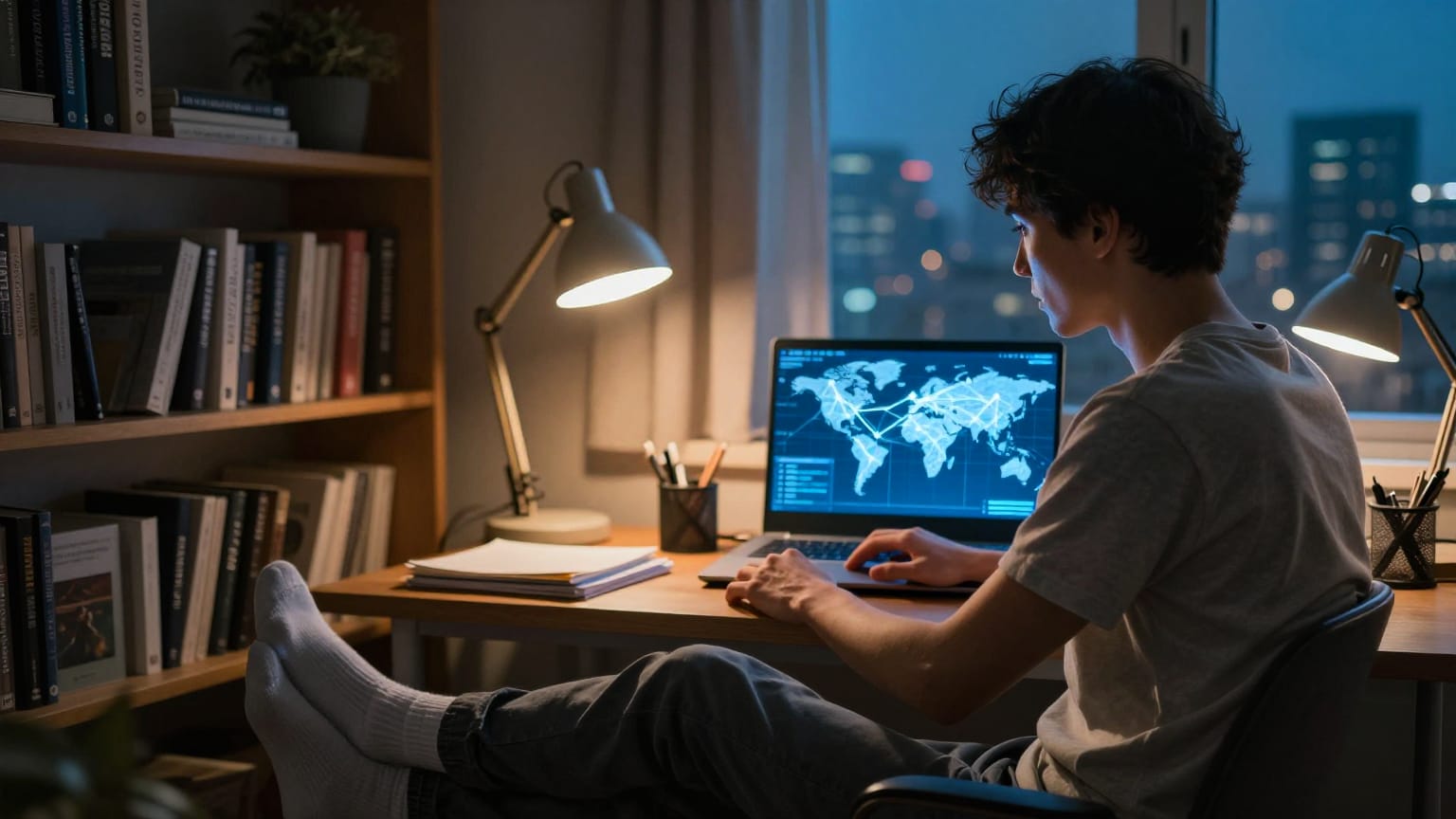
The One-Person Empire: Why 2026 is the Year of the Micro-Multinational Imagine this: It is a Tuesday morning. You are sitting in your bedroom, perhaps with a laptop balanced on a stack of books, wearing your "work-from-home" attire (which might just be comfortable socks and a t-shirt). You check your dashboard. A client in Tokyo has just approved a design. A supplier in Vietnam has shipped a new batch of components. A payment from a customer in Berlin has just cleared. You haven't left your room, yet you have just orchestrated a global supply chain and closed international deals. For decades, we believed that to be a "global business," you needed a headquarters in a glass tower, a team of hundreds, and a war chest of venture capital. Today, in 2026, that definition is becoming obsolete. We are witnessing a profound shift where the micro, small, and medium-sized enterprise (MSME) is no longer just a local shop or a regional player. It is a global entity. The rise of the "solo entrepreneur" and the "micro-multinational" is not just a trend; it is a fundamental rewriting of the rules of entrepreneurship 5 . As the world enters this new era, small businesses are standing at the center of economic and social transformation. From the resurgence of the human touch in customer service to the evolution of humanized AI, the landscape has changed. But how do we get there? How do you validate an idea, secure funding, and operate across borders when your entire company fits inside a laptop bag? Let’s dive into the news, the tools, and the strategies defining small business success in 2026. The Death of the "Local" Business Historically, a small business was defined by its radius of influence. You were a "local" business until you expanded. In 2026, that distinction is blurring. The concept of the "micro-multinational" has moved from theoretical buzzword to practical reality 5 . This is a business that operates on a global scale but maintains the agility and low overhead of a micro-enterprise. Why now? Three factors converged to make this possible. First, the maturation of digital infrastructure. Second, the evolution of AI tools that handle complex tasks previously requiring large teams. And third, a shift in consumer behavior that favors authenticity and niche expertise over mass-produced uniformity. When you start your small business in your bedroom today, you are not starting a local venture; you are starting a global node in a decentralized economic network 4 . This shift is significant because it democratizes access to global markets. You no longer need to be a Fortune 500 company to compete internationally. You just need a strong brand, a digital footprint, and the right tools. The barriers to entry have never been lower, but the barrier to excellence has never been higher. The rules have changed, and those who adapt are winning. Validating Ideas in a Noisy World One of the biggest challenges for any entrepreneur is validation: Does anyone actually want what I’m selling? In the past, this meant conducting focus groups or running expensive market research. In 2026, validation is faster, cheaper, and more data-driven, but also more chaotic. Modern validation often happens through "micro-testing." Instead of building a full product, solo entrepreneurs use digital platforms to test demand in real-time. Social media algorithms, for instance, can tell you within days if a specific niche audience is interested in a product. If you post about handmade eco-friendly phone cases and get engagement, you have validation. If you post about industrial steel widgets and get crickets, you don’t. However, validation in 2026 requires a deeper look at "humanized" feedback. As AI generates more content, consumers are craving genuine human interaction. Validating a business idea now involves not just checking if people click a link, but if they engage with the story behind it. The resurgence of the human touch is a critical component of modern market val…