From Idea to Impact: How the UN is Fueling Global MSME Growth
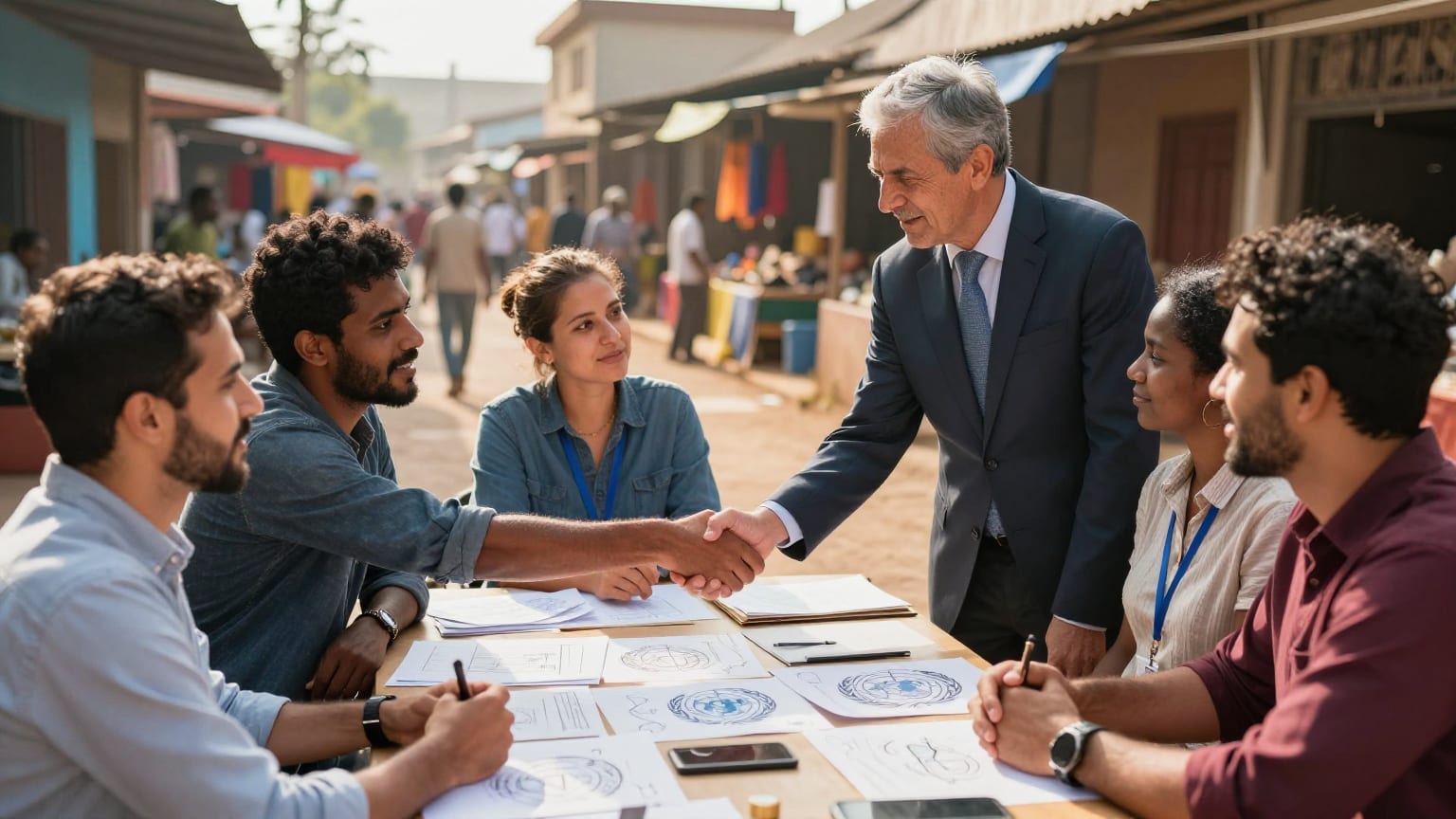
From Idea to Impact: How the UN is Fueling Global MSME Growth Let’s be honest for a second. Starting a business is less like the slick, fast-paced montage in a Hollywood movie and more like trying to navigate a ship through a storm while simultaneously trying to figure out which way is north. You have a brilliant idea. You have passion. You have a notebook full of sketches and a dream that keeps you awake at 3 AM. But then reality kicks in. You need money. You need customers. You need to know if anyone actually wants what you’re selling. And if you’re operating in a region with limited infrastructure or unstable markets, the odds feel even steeper. For decades, the narrative around global economic development has often focused on large multinational corporations or government-led industrial projects. But there is a quiet, powerful revolution happening in the micro, small, and medium-sized enterprise (MSME) sector. These businesses are the backbone of the global economy, creating the vast majority of jobs and driving innovation at the local level. Yet, they often lack the resources to scale. Enter the United Nations. It might not be the first thing that comes to mind when you think of "venture capital" or "startup incubation," but the UN is increasingly playing a pivotal role in bridging the gap between a raw idea and a sustainable, impact-driven business. Today, we are exploring how international bodies are shifting gears to support entrepreneurs not just as recipients of aid, but as agents of change. From unlocking access to finance to building digital skills and creating fair policy frameworks, the UN and its partners are helping create environments where MSMEs across the world can flourish 1 . This is not just about economics; it’s about dignity, resilience, and the power of local innovation to solve global problems. The Backbone of the Global Economy To understand why the UN is investing so heavily in MSMEs, we first need to understand what we are talking about. MSMEs are not just "small businesses." They are the primary engine of inclusive development. In many developing nations, they account for the majority of employment and a significant portion of GDP. However, they are also the most vulnerable. They often operate in the informal sector, lack access to formal banking, and struggle with regulatory burdens that are designed for larger corporations. The United Nations Industrial Development Organization (UNIDO) and other UN bodies have recognized that you cannot have sustainable development without a thriving private sector at the grassroots level. The recent Global Micro-, Small and Medium-Sized Enterprises Report serves as a testament to this recognition, explicitly acknowledging the efforts of every entrepreneur from the micro-business owner to the medium-sized factory manager 5 . It is a reminder that behind every statistic is a person, a family, and a community relying on their success. Historically, development aid often took a "top-down" approach, where large projects were built for communities rather than by them. The shift toward supporting MSMEs represents a "bottom-up" philosophy. It assumes that local entrepreneurs know their markets best and that if you give them the right tools, they will build the most efficient and relevant solutions. This shift is cultural as well as economic, moving away from dependency and toward empowerment. Breaking the Financial Deadlock If there is one barrier that kills more startups than bad ideas, it is the lack of capital. For a large tech firm, raising a Series A round is a standard milestone. For a small agricultural cooperative in Sub-Saharan Africa or a textile workshop in Southeast Asia, getting a bank loan can be impossible. Banks require collateral that small businesses simply don’t have, and interest rates are often prohibitive. This is where UN-backed initiatives shine. By combining access to finance with skills development, the UN is helping to de-risk these investme…