From NYC to Global: How MSMEs Are Bridging the Funding Gap
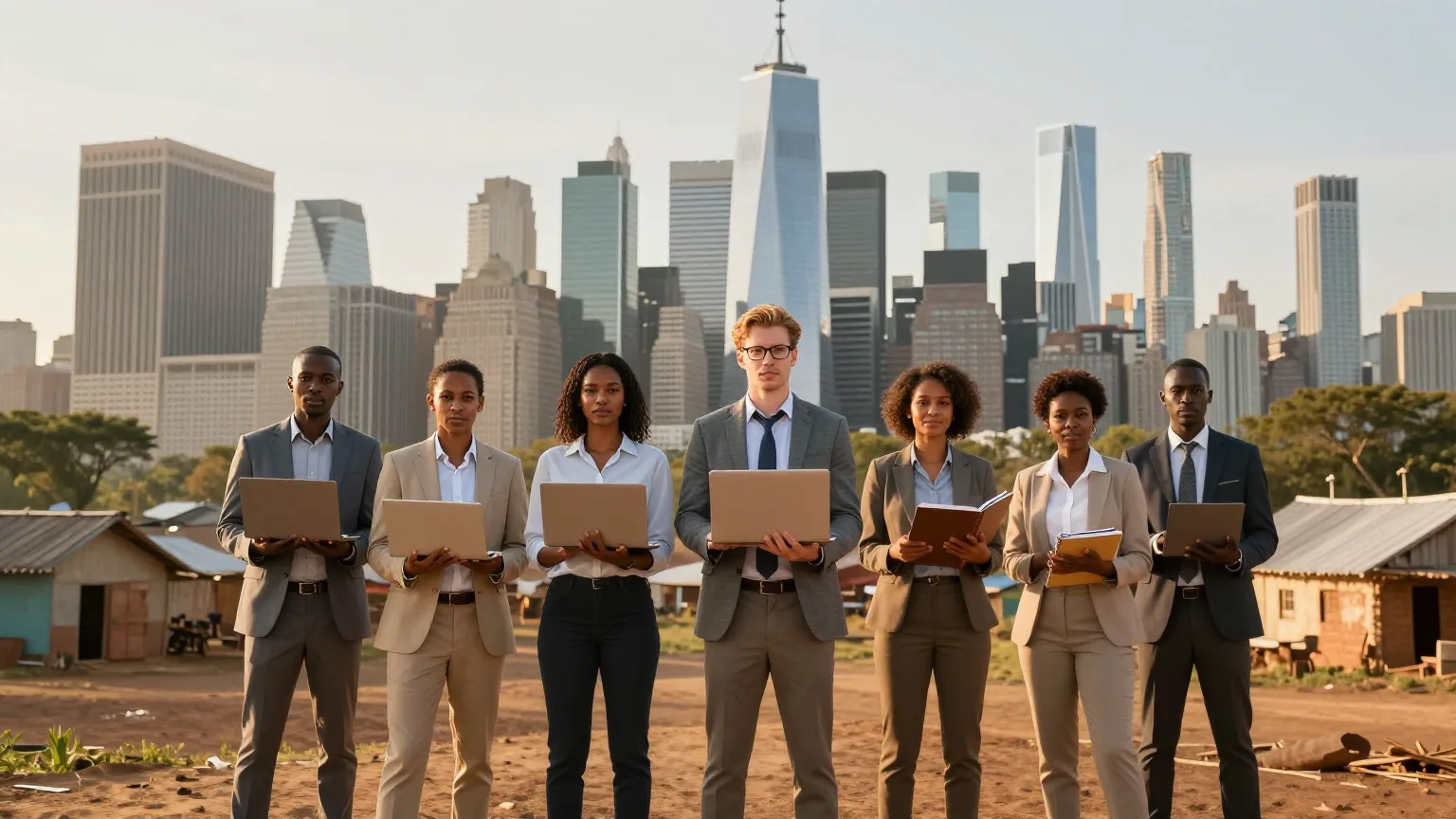
The Great Funding Divide: Why Your Best Idea Might Not Get a Loan Imagine this: You have a brilliant idea. It solves a real problem. The market is hungry for it. You’ve done the legwork, validated the concept, and you’re ready to build. You walk into a bank in New York City, or perhaps a venture capital firm in Silicon Valley, and you pitch your dream. The response? A polite nod, a standard form, and a check for a substantial amount of capital. Now, imagine doing the exact same thing in a rural area of Sub-Saharan Africa, a small town in Eastern Europe, or a developing region in Southeast Asia. The response? A shrug, a request for collateral you don’t have, or a simple "no." This is the reality for the vast majority of Micro, Small, and Medium-sized Enterprises (MSMEs) around the globe. While the narrative of the "self-made billionaire" dominates the headlines, the true engine of global economic growth is the small business owner navigating a complex, often uneven, landscape of funding. As we navigate the economic shifts of 2026, understanding how MSMEs are bridging this gap is not just an academic exercise; it is a matter of global economic justice and sustainable development. In this post, we’re going to take a journey from the bustling financial hubs of New York to the emerging markets of the Global South. We’ll explore why funding gaps exist, how the United Nations and other international bodies are stepping in, and how modern technology is leveling the playing field. We’ll look at the data, the cultural nuances, and the innovative solutions that are helping small businesses survive and thrive. Defining the MSME: The Backbone of the Economy Before we dive into the funding mechanics, let’s clarify who we are talking about. MSMEs stand for Micro, Small, and Medium-sized Enterprises. These are not the tech giants you see on the cover of business magazines. They are the family-owned bakery, the local software consultancy, the agricultural cooperative, and the independent retailer. They are the "small businesses" with "big impact." According to the United Nations, MSMEs are critical to driving sustainable development. By combining access to finance, skills development, market opportunities, and fair policy frameworks, the UN and its partners are helping create environments where these enterprises can flourish 3 . In many developing economies, MSMEs account for the majority of employment and a significant portion of GDP. When these businesses fail to access capital, the ripple effects are felt in local communities, leading to unemployment and stunted economic growth. However, the definition of "small" can vary significantly by region. What is considered a "medium" enterprise in the United States might be a "large" enterprise in a developing nation. This discrepancy makes cross-border comparisons difficult but also highlights the unique challenges faced by entrepreneurs in different parts of the world. Understanding these local contexts is the first step in bridging the funding gap. The New York Standard: Why Geography Matters Let’s start with a familiar example: New York. For decades, New York has been synonymous with finance, entrepreneurship, and high-growth startups. The city is home to a dense ecosystem of venture capital firms, angel investors, and banks willing to take risks on innovative ideas. If you are a tech founder in Manhattan, your chances of securing seed funding are significantly higher than if you were in a similar-sized city in a less economically developed region. But why? It’s not just about the money. It’s about the ecosystem. New York offers a network of mentors, incubators, and service providers that reduce the risk for investors. When a VC firm in New York invests in a startup, they have a clear exit strategy: they can sell their stake to a larger company on the Nasdaq or NYSE. In other regions, exit strategies may be limited, making investors more cautious. Interestingly, even in a hub like New York, th…